

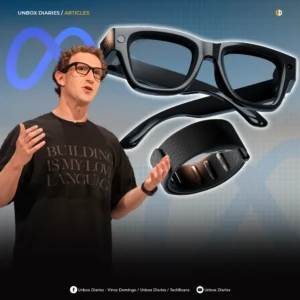
Meta is going all-in on wearable AI, with CEO Mark Zuckerberg betting that glasses and other devices could eventually become the main way people interact with technology.

At Meta’s annual Connect conference, Zuckerberg acknowledged that it is a “wild time to be building” AI as the industry debates how quickly advanced AI should develop. Meta, however, remains firmly on the optimistic side.
Zuckerberg pushed back against calls for a coordinated slowdown in advanced AI development, arguing that individual AI companies should focus on making their systems safe. He also said Meta believes powerful AI should be distributed widely, with checks and balances, rather than controlled by a small number of companies.
For Meta, that future starts with Muse, its new personal AI agent.
Muse is designed to go beyond answering questions. It can help users plan tasks, make reservations, order products, organize projects, and work across connected services. Meta is also adding integrations with platforms and companies including Spotify, OpenTable, Ticketmaster, Walmart, Best Buy, Sephora, Expedia, Instacart, Notion, GitHub and Box.
The bigger idea is bringing Muse beyond the phone. Meta plans to integrate the AI agent into its smart glasses so users can interact with it hands-free and use what they see around them as context.
Meta is also developing Muse Charm, a small keychain-like device that will let users access their AI without a smartphone, computer or smart glasses. Meta says it is planned for the December holiday period.
The wearable push doesn’t stop there. Meta unveiled new AI-powered glasses and updates to its existing lineup, adding features that let users interact through voice, eye movements and hand gestures.
The company also introduced Ray-Ban Meta Audio, a camera-free and display-free pair of glasses focused on music, calls and AI. It starts at $349 and is scheduled to arrive in October.
Meta is also expanding its Ray-Ban Display glasses with features such as cycling and public-transit navigation, personalized holograms for video calls, and additional AI capabilities.
The company expects to offer more than 100 AI-glasses options across Ray-Ban, Oakley and Meta Glasses by the end of 2026, with the lineup expanding to additional markets including the Philippines.
Meta also showed off a new Meta VR Glasses concept that weighs around 100 grams, significantly less than a traditional VR headset. Instead of controllers, users can interact through eye tracking, hand gestures and voice.
The glasses can be used for gaming, live sports, virtual cinema and productivity. Meta says users will eventually be able to create virtual screens and connect the glasses to Mac and Windows PCs. The product is scheduled to launch in spring 2027 for $1,300.