

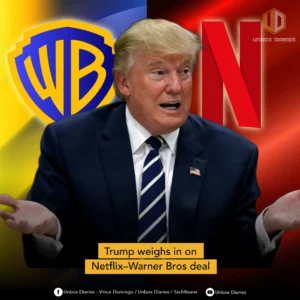
US President Donald Trump has stepped directly into one of the biggest media shake-ups of the year: the proposed acquisition of Warner Bros. Discovery (WBD) by Netflix. As the deal rocks Hollywood and sends ripples through streaming platforms globally, Trump declared he will play a role in deciding whether the merger should be allowed to proceed.

The acquisition, valued at between $72 billion and $83 billion depending on valuation and debt assumptions, would unite Netflix’s vast streaming engine with Warner Bros’ extensive film and studio assets, including HBO Max and major franchises.
Trump’s public warning came as he walked the red carpet at the Kennedy Center Honors. He praised Netflix and its CEO for what they’ve built, but he did not shy away from pointing out potential antitrust issues. He said that combining Netflix’s existing reach with Warner Bros. content would result in a “very big market share.”
By asserting he will “be involved in that decision,” Trump signals that the administration’s regulatory oversight won’t just be a routine check but could be shaped by broader political and economic considerations.
Former regulators and media-industry watchers describe this step as unusual: a sitting president publicly previewing involvement in the fate of a specific corporate merger. Such comments can influence how agencies approach antitrust evaluations.
What’s at Stake for Consumers and Hollywood
If approved, the fusion of Netflix’s streaming infrastructure with Warner Bros’ studios would give one company unmatched control over content creation, distribution, and streaming reach. That could mean more originals but also fewer choices and possibly less competition in pricing and content variety. Critics warn this could lead to monopoly-level dominance in streaming.
Hollywood unions and smaller studios are already pushing back, arguing that such consolidation could hurt content diversity, reduce bargaining power for creators, and lead to job losses.
On the flip side, proponents argue that the merger could deliver efficiencies and broader content libraries to viewers worldwide. Netflix has reportedly prepared for regulatory scrutiny, even offering a substantial break-up fee in case the deal fails to pass antitrust checks.
The deal still needs approval from regulators, including antitrust authorities in the US and potentially other jurisdictions globally. With Trump indicating he will be personally involved, this review could go beyond competition law into broader political, cultural, or economic considerations.
Meanwhile, a rival bid has emerged. Paramount Skydance launched a hostile cash offer for Warner Bros Discovery, complicating matters further and potentially turning this into a high-stakes bidding war with major media, legal, and political implications.
Any regulatory delay, legal challenge, or political interference could slow or derail the deal. That uncertainty affects not just Netflix and Warner Bros but the whole entertainment ecosystem.
What started as a blockbuster corporate deal is now heading toward a full-blown political and regulatory crossroads. With the president himself stating he’ll have a final say, the road ahead for the Netflix-Warner Bros deal just got a lot bumpier. For viewers, creators, and competitors, this merger could reshape the streaming landscape, unless the approval process hits a major snag.
For now, all eyes are on the regulators, the courts, and Washington.
Should a U.S. president have any influence over tech and media mergers?
Let us know!